


Champion Men Graphic Lounge Short,Standard Fit,7" Inseam,Script Logo,Lightweight 100% Cotton Jersy,Available Regular,Big,Tall(Black - C Logo)
$ 98.00
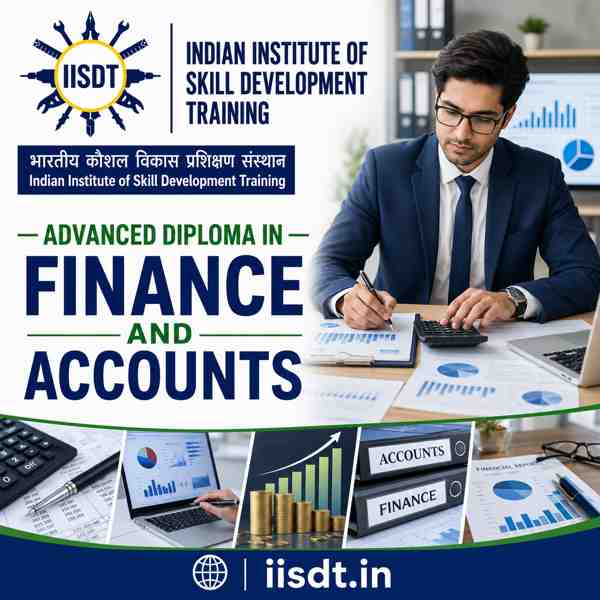
Advanced Diploma in Finance and Accounts













Description Course Name: Advanced Diploma in Finance and Accounts Course Id: ADFA/Q1001. Eligibility: Completion of 10 2 (higher Secondary) or equivalent. Objective: The Advanced Diploma in Finance and Accounts is a versatile qualification that provides a strong foundation for pursuing a career in the dynamic and evolving world of finance and accounting. Whether you aim to specialize in corporate finance, taxation, auditing, or financial analysis, this diploma equips you with the expertise to succeed in diverse professional roles. Duration: Six Months. How to Enroll and Get Certified in Your Chosen Course: Step 1: Choose the course you wish to get certified in. Step 2: Click on the “Enroll Now” button. Step 3: Proceed with the enrollment process. Step 4: Enter your billing details and continue to course fee payment. Step 5: You will be redirected to the payment gateway. Pay the course and exam fee using one of the following methods: Debit/Credit Card, Wallet, Paytm, Net Banking, UPI, or Google Pay. Step 6: After successful payment, you will receive your study material login ID and password via email within 48 hours of fee payment. Step 7: Once you complete the course, take the online examination. Step 8: Upon passing the examination, you will receive: • A soft copy (scanned) of your certificate via email within 7 days of examination. • A hard copy (original with official seal and signature) sent to your address within 45 day of declaration of result. Step 9: After certification, you will be offered job opportunities aligned with your area of interest. Online Examination Detail: Duration- 120 minutes. No. of Questions- 60. (Multiple Choice Questions). 10 Questions from each module, each carry 10 marks. Maximum Marks- 600, Passing Marks- 40%. There is no negative marking in this module. How Students will be Graded: S.No. Marks Grade 1 91-100 O (Outstanding) 2 81-90 A (Excellent) 3 71-80 A (Very Good) 4 61-70 B (Good) 5 51-60 C (Average) 6 41-50 P (Pass) 7 0-40 F (Fail) Key Benefits of Certification- Earning a professional certification not only validates your skills but also enhances your employability. Here are the major benefits you gain: Practical, Job-Ready Skills – Our certifications are designed to equip you with real-world, hands-on skills that match current industry demands — helping you become employment-ready from day one. Lifetime Validity – Your certification is valid for a lifetime — no renewals or expirations. It serves as a permanent proof of your skills and training. Lifetime Certificate Verification – Employers and institutions can verify your certification anytime through a secure and reliable verification system — adding credibility to your qualifications. Industry-Aligned Certification –All certifications are developed in consultation with industry experts to ensure that what you learn is current, relevant, and aligned with market needs. Preferred by Employers – Candidates from ISO-certified institutes are often prioritized by recruiters due to their exposure to standardized, high-quality training. Free Job Assistance Based on Your Career Interests – Receive personalized job assistance and career guidance in your preferred domain, helping you land the right role faster. Syllabus Financial Accounting: Basic Accounting Concepts and Principles: Accounting concepts: consistency, conservatism, accruals, and matching, Double-entry bookkeeping, Journals, ledgers, trial balances, and financial statements, Preparation of Financial Statements: Income statement, Balance sheet, Cash flow statement, Statement of changes in equity, Interpretation of Financial Statements: Ratio analysis (liquidity, solvency, profitability, and efficiency ratios), Cash flow analysis. Management Accounting: Cost Accounting: Cost concepts and classification, Methods of costing (job order costing, process costing, activity-based costing), Cost-volume-profit analysis, Budgeting and Forecasting: Types of budgets (flexible, static, zero-based, incremental), Variance analysis, Forecasting techniques, Management Control and Performance Evaluation: Key performance indicators (KPIs), Benchmarking, Responsibility accounting. Financial Management: Capital Budgeting and Investment Appraisal: Time value of money (NPV, IRR, Payback period), Risk and return analysis, Capital structure theories (modigliani-miller, pecking order theory), Working Capital Management: Cash management, Inventory management, Receivables and payables management, Financial Planning and Decision Making: Short-term and long-term financial planning, Sources of finance (equity, debt, hybrid instruments). Corporate Finance: Corporate Financial Strategy: Mergers and acquisitions, Corporate governance, Dividend policy, Risk Management: Identifying financial risks, Hedging strategies (for interest rates, currency, and commodity risks), Insurance and derivatives. Taxation: Principles of Taxation: Income tax: individual and corporate, Goods and Services Tax (GST), VAT and excise duty, Tax Planning and Compliance: Tax avoidance vs. tax evasion, International taxation and transfer pricing, Tax reporting and filing. Auditing and Assurance: Introduction to Auditing: Role of auditors, Types of audits (internal, external, forensic), Audit planning and risk assessment, Audit Process and Techniques: Evidence gathering, Audit procedures and techniques, Fraud detection and prevention, Ethics and Professional Standards in Auditing: Ethical standards for accountants and auditors, Audit independence, Regulatory frameworks and international standards (IFAC, GAAP). Job Opportunities after Advanced Diploma in Finance and Accounts The Advanced Diploma in Finance and Accounts equips graduates with advanced skills in financial management, accounting principles, taxation, auditing, and corporate finance. Graduates can pursue rewarding careers in finance, accounting, taxation, and business management across industries. Top Career Options: Financial Analyst, Junior Accountant, Tax Assistant, Audit Associate, Accounts Executive, Finance Manager, Tax Consultant, Internal Auditor, Corporate Finance Analyst, CFO (with experience) Salary Range (India):Entry-Level (0–2 years): ₹3.5 – 6 LPAMid-Level (3–5 years): ₹6 – 10 LPASenior-Level / Leadership Roles (5 years): ₹10 – 20 LPA Key Workplaces: Banks, financial institutions, corporate finance departments, accounting firms, auditing firms, taxation consultancies, investment firms, multinational companies Graduates gain strong expertise in accounting, taxation, auditing, and financial management, opening opportunities in financial analysis, corporate accounting, auditing, taxation consulting, and leadership roles. Career growth and higher salary potential increase with experience, specialized skills, and additional certifications like CFA or CPA.